In this article
- What are typical keynote speaker fees in the UK?
- Why can two keynote speakers charge completely different fees?
- Does a famous speaker always cost more?
- What does a keynote speaker’s fee actually include?
- What can increase the cost of a keynote speaker?
- Are travel and accommodation included in speaker fees?
- Is it cheaper to book a speaker directly or through a speaker bureau?
- How much does it cost to book Paul McGee?
- How do you get the best value from your speaker budget?
- So, what should you budget for a keynote speaker?
Let’s deal with the question you’ve probably come here to have answered. How much does a keynote speaker actually cost?
In the UK, you could realistically pay anything from around £1,000 to £30,000 or considerably more for a keynote speaker.
Helpful? Probably not entirely.
It’s a bit like asking, “How much does a car cost?” Technically, there is an answer. Unfortunately, that answer stretches from something that gets you reliably to Tesco all the way to something that probably requires its own security guard. Speaker fees work in much the same way.
An emerging specialist speaking at a small internal event may cost a few thousand pounds. An established professional keynote speaker will generally cost more. Add a household name, major sporting figure, globally recognised business leader or celebrity and you’re potentially into tens of thousands, sometimes considerably beyond that.
Published UK speaker-bureau pricing currently puts many professional corporate keynote bookings somewhere between £3,000 and £15,000, although there are plenty of speakers above and below that range.
The more useful question, then, isn’t simply: “How much does a speaker cost?” It’s:
What am I actually paying for, and what does my event need?
If you’re still deciding whether a keynote is the right format for your event, start with our guide to what a keynote speaker is and what they actually do.
What are typical keynote speaker fees in the UK?
As a rough planning guide, here’s how one current UK speaker-bureau guide bands the market.
| Speaker type | Approximate UK fee |
|---|---|
| Emerging speaker or niche specialist | £1,000–£3,000 |
| Established professional speaker | £3,000–£7,500 |
| Recognised expert, author or established keynote speaker | £7,500–£15,000 |
| High-profile business, media or sporting name | £15,000–£30,000 |
| Celebrity or major international name | £30,000+ |
Those are planning figures, not a rate card. Each bureau uses slightly different bands, which rather proves the point. Speakers Corner, for example, currently starts its published professional bands at £2,000–£5,000 and goes to £25,000+ for its highest band. The guide behind the table above places the wider market at roughly £1,000–£30,000+, with most corporate events budgeting £3,000–£15,000.
So if you’re putting an initial budget together for a corporate conference and haven’t chosen a speaker yet, £5,000–£10,000 is a perfectly sensible place to begin the conversation.
But please don’t interpret that as me saying every good speaker costs between five and ten grand. They don’t.
Why can two keynote speakers charge completely different fees?
Here’s where speaker fees can seem slightly odd. Two people can both deliver a 45-minute keynote. One costs £4,000. The other costs £20,000.
Surely they’re both talking for the same amount of time? Yes. But you’re not really paying somebody by the minute. If you were, keynote speaking would be an extraordinarily strange form of taxi meter.
What you’re usually paying for is some combination of experience, expertise, demand, profile, preparation and the value that person brings to your particular event.
A speaker who has spent 20 years developing their thinking, written several books, spoken to hundreds of organisations and refined the way they communicate an idea is not simply selling you the 45 minutes you see on stage. You’re buying what came before those 45 minutes as well.
The same applies in most professions. A skilled person can sometimes do something quickly precisely because it took them years to learn how.
Does a famous speaker always cost more?
Usually. Does that automatically make them better for your event? No.
Profile has value, of course. If you’re selling tickets, trying to generate press coverage or need a name that makes people immediately pay attention to the conference programme, recognition may be an important part of what you’re buying. That’s perfectly legitimate.
But if the purpose of your event is to help 300 leaders navigate organisational change, I’d be far more interested in whether the speaker can genuinely help those 300 people than whether your neighbour has heard of them.
You can spend a considerable amount of money on fame. You can also get extraordinary value from someone with less mainstream profile but deep expertise and years of experience working with exactly the kind of audience you’ve got in the room.
So I’d come back to the question from my previous article on what a keynote speaker actually does:
What do you want to happen as a result of the keynote?
Start there. Then look at the budget.
What does a keynote speaker’s fee actually include?
This is where it’s worth asking questions before you compare quotes. A typical professional keynote fee will usually include the actual presentation and some degree of preparation beforehand. That preparation matters.
When I’m speaking to an organisation, I want to know what they’re dealing with. Who’s in the room? What’s changed recently? What’s the event trying to achieve? What are the people attending concerned about? What language is being used internally? What absolutely should I mention?
And, equally importantly, what would cause the event organiser to hide behind a curtain if I accidentally mentioned it? That’s all part of making a keynote relevant.
Preparation and tailoring are part of the value too. Paul explains why understanding the client, audience and brief matters before a speaker ever steps on stage.
Current UK bureau guidance commonly includes the keynote itself and pre-event preparation or briefing within the headline fee, while things such as travel, accommodation, additional workshops and recording rights may be separate.
So when you’re comparing prices, ask what’s included. Otherwise two quotes that look different may actually be offering different things.
What can increase the cost of a keynote speaker?
There isn’t one universal formula, but several things can affect the fee.
The speaker’s experience and demand
Someone speaking occasionally alongside another career is likely to price differently from someone who has spent decades speaking professionally. Likewise, if a speaker has a very full diary, demand tends to affect price. Economics hasn’t become particularly mysterious just because there’s a stage involved.
Their profile
Authors, television personalities, elite athletes, high-profile entrepreneurs and well-known public figures can command larger fees partly because their name itself adds value to an event. Again, that can be completely worthwhile. Just make sure it’s value you actually need.
How much preparation is required
There’s a significant difference between adapting an established keynote for an audience and creating something highly bespoke involving research, interviews and completely new material. If you want the latter, expect the preparation involved to be reflected somewhere in the price.
Where the event is
Manchester is considerably easier for me to get to than Melbourne. I realise this is not exactly a groundbreaking geographical insight. But travel matters.
International events can involve flights, hotels and days out of a speaker’s diary rather than simply an hour on stage.
What else you want the speaker to do
Perhaps you’d like a keynote in the morning and a workshop in the afternoon. Or a panel session. Or a leadership Q&A. Or some video content before the event.
All potentially useful. But they’re additional pieces of work, so establish what’s included in the original quote.

Are travel and accommodation included in speaker fees?
Sometimes. Sometimes not. Which is why you should ask.
VAT, travel, hotels and other event-related expenses can sit outside the quoted keynote fee depending on the speaker and how the booking is structured. Current UK booking guides also flag recording rights and additional sessions as common extras.
If you’re comparing several speakers, don’t simply compare the large number written next to “fee”. Ask each person or bureau for the total likely cost. It’s a much more useful number.
Finding out after you’ve signed the contract that the speaker requires two nights in a hotel and is travelling from Los Angeles can rather spoil the pleasure of saving £500 on their keynote fee.
Is it cheaper to book a speaker directly or through a speaker bureau?
It depends. And I wouldn’t make the decision purely on that basis.
A good speaker bureau can be extremely helpful. They know the market, understand their speakers, can recommend people you’ve perhaps never heard of and take a lot of the administration out of the process. If you’re organising an event and don’t already know who you want, that expertise can be particularly valuable.
Booking directly can also work extremely well, especially if you already know the speaker you’re interested in and want an initial conversation about fit. I’ve worked successfully both directly with organisations and through bureau bookings throughout my career.
So rather than obsessing over which route is universally “cheapest”, I’d concentrate on whether you’re getting the right speaker, clear terms and a good briefing process. That’s likely to make a far bigger difference to your event.
How much does it cost to book Paul McGee?
If you’re reading this because you’re specifically wondering what it costs to book me, the simplest answer is to get in touch with my team because the exact fee will depend on the event.
That can vary depending on things such as location, format and what’s required around the keynote, so please don’t treat an online figure as a fixed quotation.
Tell us what you’re planning.
We can have a conversation.
Nobody needs to perform some strange dance where you hide the budget, we hide the fee and everybody spends three emails pretending money isn’t involved.
It’s involved.
Let’s talk about it.
How do you get the best value from your speaker budget?
This might sound strange coming from somebody who earns a living speaking, but I wouldn’t advise spending more than you need to. I’d advise spending well. There is a difference.
If you’ve got £10,000 available, don’t immediately decide that finding a £10,000 speaker is therefore the objective. Decide what you need.
Perhaps a £6,000 speaker who’s a superb match for the audience will have far more impact than a £15,000 speaker whose biggest selling point is that everybody recognises their face. Equally, there are events where spending significantly more on the right person makes complete sense.
I’d think about value in terms of what happens before, during and after the keynote.
Could the speaker’s ideas connect to the wider theme of the conference? Could managers use the framework afterwards? Could the language introduced during the talk become something teams refer back to? Could a follow-up resource help embed the message? That’s when 45 minutes begins to have a life beyond 45 minutes.
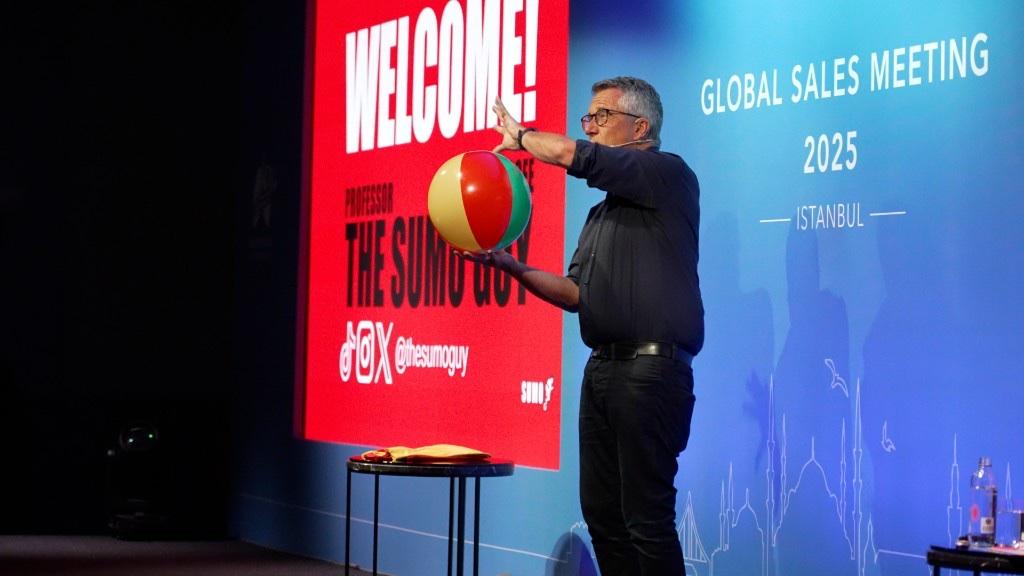
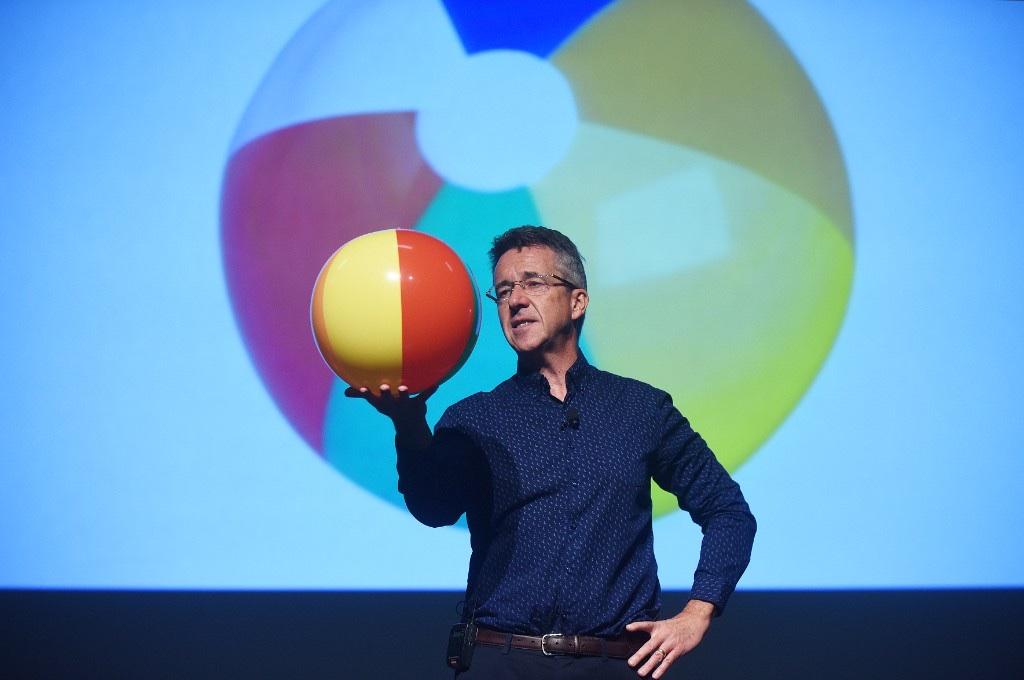
With SUMO, that’s always been important to me. The principles are deliberately simple enough for people to remember and actually use. Whether it’s E + R = O, Remember the Beachball or Hippo Time is OK, the point isn’t simply to hear the phrase in a conference room. The point is what happens when life gets difficult afterwards.
If you’re planning an event and want to see how Paul approaches keynote speaking for organisations, explore his keynote speaking programmes and themes.
So, what should you budget for a keynote speaker?
If you need a number for an initial UK corporate-event budget, I’d suggest this:
Allow somewhere around £5,000–£10,000 for an experienced professional keynote speaker, then adjust upwards or downwards depending on the level of profile, expertise and event requirements you’re looking for.
That sits comfortably within the wider published UK corporate market, while giving you access to a substantial range of established speakers.
And remember: the aim isn’t to find the most expensive speaker your budget allows. Nor is it to find the cheapest. It’s to find the person who can make the biggest difference to the people sitting in the room.
Because £5,000 spent on the wrong speaker is expensive. £5,000 spent on the right one might prove excellent value.